An electric glass-top hob looks like the sensible modern choice: heat at the touch of a button, and nothing to sweep up afterwards. An open fire, by comparison, seems primitive and wasteful, even a little grubby. That comparison holds up only if we stop looking the moment the electricity reaches the kitchen. Follow it back to where it was made and the sums come out differently.
When people call an electric hob ‘efficient’, they usually mean efficient at the point of use. A radiant glass-top hob turns perhaps 70–75 per cent of its electricity into heat that actually reaches the pan, and an induction hob does better still, at about 85–90 per cent. That electricity had to be made somewhere first, though, and most of the losses happen there.
A coal or nuclear power station burns or splits its fuel to boil water and drive a turbine. It converts perhaps a third of the fuel’s energy into electricity; the rest leaves as waste heat, up a cooling tower or into a river. Modern gas-fired stations fare better, often reaching 50–60 per cent. The electricity must then travel through transformers and many miles of cable, and in Britain something in the region of 7 or 8 per cent is lost along the way.
Put the whole chain together and a pan of water boiled on fossil-fuelled electricity might reach only 20–35 per cent overall efficiency, depending on the power station and the hob, a figure you will not find printed on the box. Renewables complicate the picture.
A growing share of Britain’s electricity now comes from wind and solar, where there is no fuel being burnt and wasted in the first place, and the arithmetic changes accordingly. Nevertheless, it seems a curious habit to burn fuel to boil water, spin a turbine, send the result down miles of wire, and then use it to heat a pan of water all over again. Few of us question it, perhaps because the waste happens out of sight, in somebody else’s cooling tower.
Complaints about wasteful cooking are hardly new. Count Rumford (Benjamin Thompson, 1753–1814) spent years studying kitchen fires, and his essay on the construction of kitchen fireplaces, published around the turn of the nineteenth century, is a long lament on the subject.
He was scathing about the open hearth, where most of the heat went up the chimney, and his remedy was an enclosed range in which each pot sat snugly over its own small, controlled fire. Rumford was hardly an advocate for the open fire, yet the principle he kept returning to, burning fuel as close as possible to where the heat is needed, applies to the power station as much as to the hearth.
A badly managed open fire is genuinely poor. With the wind scattering the flames and heat escaping in every direction, it manages perhaps 10–15 per cent efficiency, and that is the version most of us picture when we think ‘primitive’. Sheltered from the wind and fed with dry, seasoned wood, with the pot sitting close to the coals, it does noticeably better.
An insulated rocket stove goes further, channelling hot gases tightly around the pot and burning the fuel more completely. Independent tests suggest such stoves typically reach 25–40 per cent, with the upper end reserved for well-designed models fitted with a skirt around the pot.
At its best, then, a good wood stove can match or edge past electricity from a fossil-fuelled grid, though it will not beat an induction hob running on wind power. What it does do is take the power station and the grid out of the equation altogether.
Wood smoke deserves a word of caution. Fine particulate matter from burning wood is a serious health concern; the World Health Organization attributes millions of deaths each year worldwide to smoke from household cooking fires, most of them in poorly ventilated homes.
Outdoor burning is a very different matter from cooking indoors over an open flame. In England, much of the country falls within smoke control areas, and rules introduced in 2021 restrict the sale of wet wood in small quantities, so check your local regulations, and never cook with an open flame in an enclosed space.
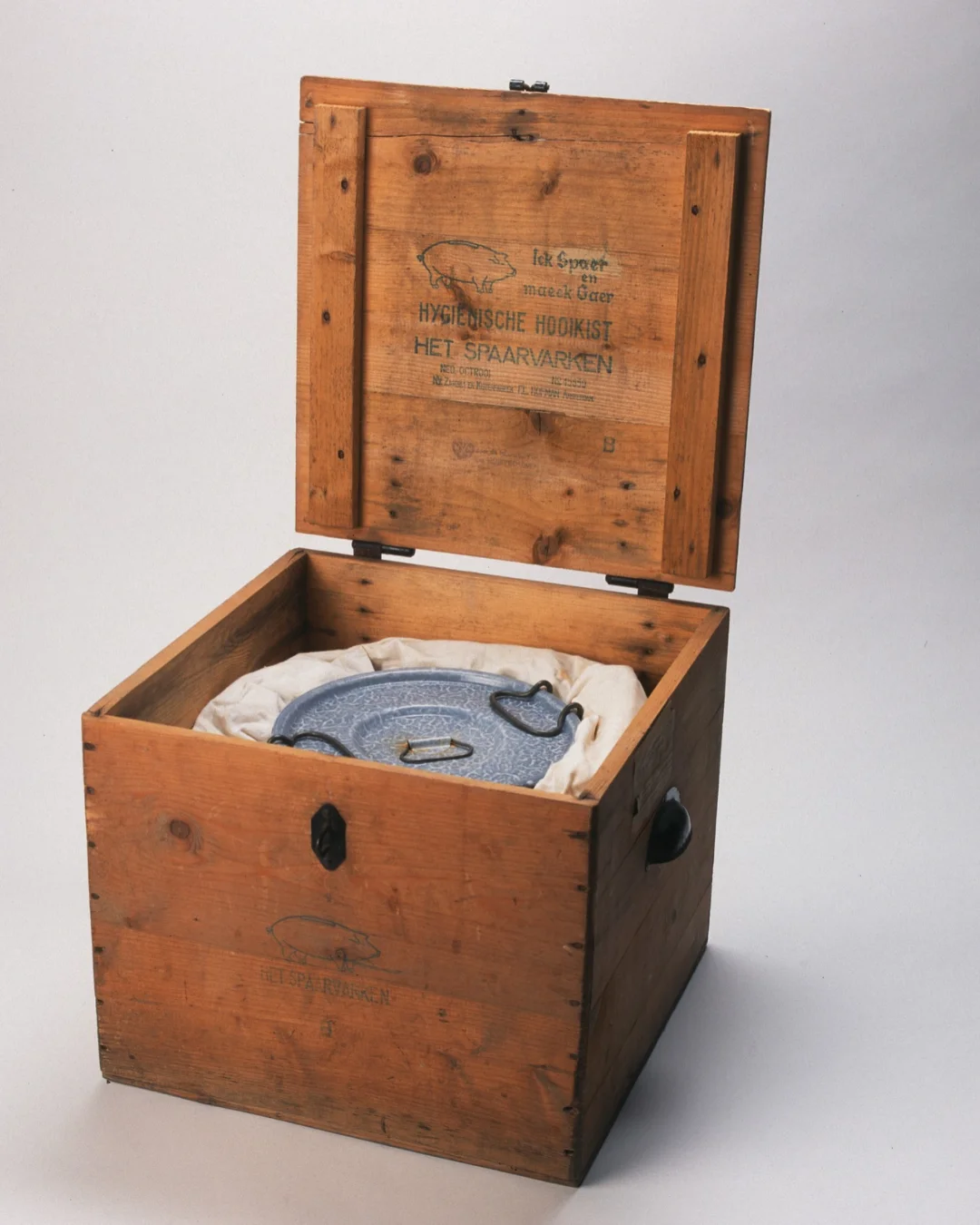
Most of the energy spent in cooking goes on keeping food simmering for an hour or two after it reaches the boil, with a flame or element running the whole time just to hold a gentle bubble. The old answer is the haybox, or fireless cooker, and it is almost embarrassingly simple.
Bring your stew or pulses to a rolling boil for 15 minutes, then take the pot straight off the heat. Seal it tightly and pack it into an insulated box filled with hay, wool, sawdust, or an old duvet. With so little heat able to escape, the food carries on cooking gently on its own stored warmth for hours.
The idea seems to have travelled widely in the nineteenth century; it appears that a Norwegian version was shown at the Paris Exhibition of 1867. Hayboxes were later used to carry hot food to soldiers during the First World War, and Britain’s wartime Ministry of Food promoted them to households as a way of stretching scarce fuel.
How much fuel you save depends on the dish and how well the box is insulated. For a stew that would otherwise simmer for two hours, though, nearly all of that simmering fuel is simply never burnt. A few sensible precautions apply.
Dried kidney beans must be boiled hard for at least fifteen minutes before they go into the box, as gentle heat alone does not destroy the natural toxin they contain. The pot should stay sealed and the box well packed so the food remains hot, and it is wise to bring the food back to a full boil before serving if it has cooled. I would not leave it in the box overnight, since food that drifts into lukewarm temperatures for hours can harbour bacteria.
For anyone who would rather not build their own, the Thermos Shuttle Chef, a 4.5-litre vacuum-insulated cooker, works on exactly the same principle, and it is the one I recommend.
None of this requires going off-grid. Electricity is high-grade energy, and boiling several litres of water with it is a humble use for it, unless it happens to be coming straight off your own solar panels. Long-simmered meals can be finished in a haybox rather than left on the hob for hours. A flat-bottomed pot with a tight lid helps too; it sounds obvious, yet many of us lose heat out of the sides the whole time we cook.
You may believe the efficiency figure printed on the appliance, or you might trace the energy back to where it began and decide for yourself where it has gone. Rumford, I suspect, would have done the latter.